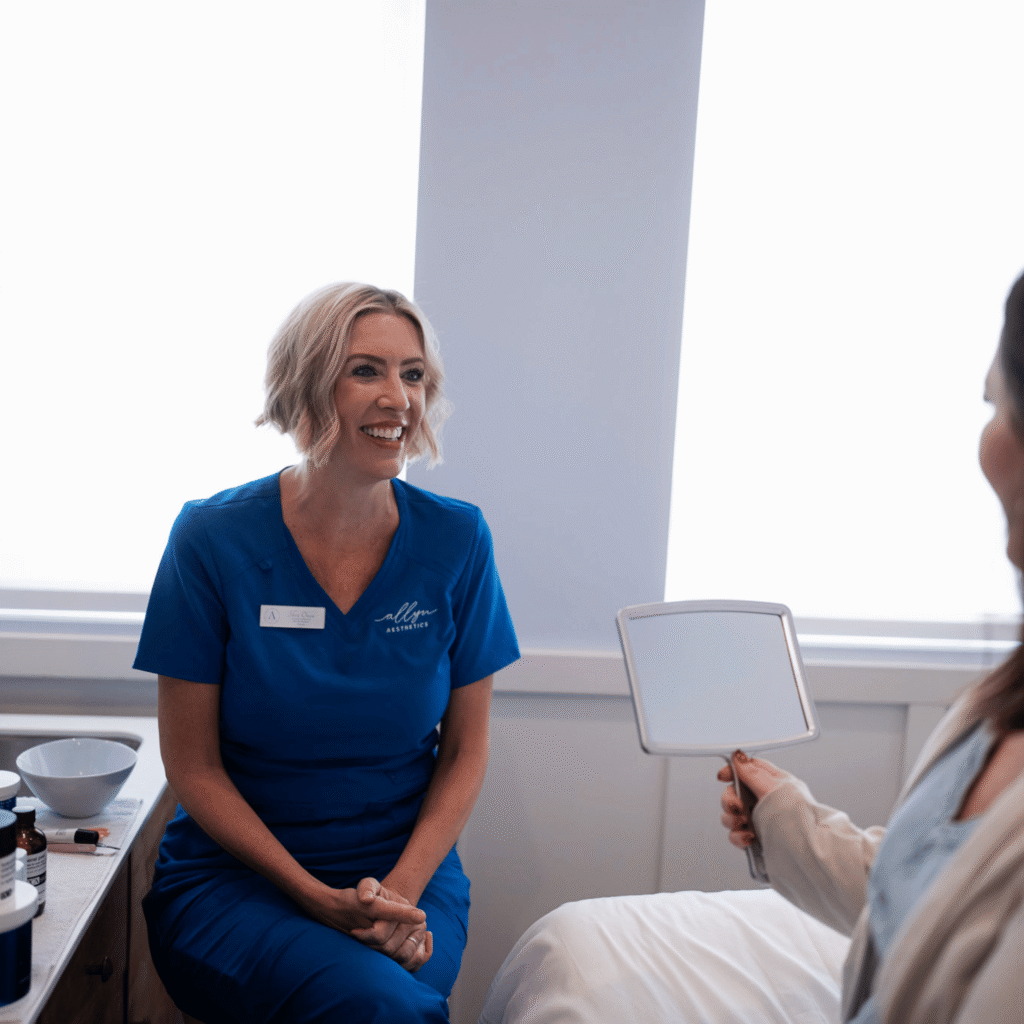
Trust Your Esthetician, Not the Paid Influencer
Every esthetician has lived this moment. A client settles into the treatment chair, pulls out their phone, and asks about the latest miracle product they saw promoted on TikTok.
It can be frustrating — but honestly, it’s also an opportunity. Moments like these are exactly where we get to do what we do best: educate. So let’s break down why listening to your esthetician far outweighs listening to the latest paid influencer on social media.
A License vs. a Ring Light
To put it simply, estheticians are state-licensed to offer professional, personalized skin treatments in a safe and sanitary manner. That license represents hundreds of hours of training in skin anatomy, product chemistry, contraindications, and sanitation — plus continuing accountability to a state board.
Social media influencers and content creators need no formal training or licensing at all to promote a product. A large following is not a credential, and a discount code is not a diagnosis.
Your Skin, Evaluated in Person — Not Through a Screen
As estheticians, we evaluate your skin in person. We look past surface-level concerns to understand what’s actually happening with your skin — its barrier health, hydration, sensitivity, and how it responds over time.
We’re trained to work with specific skin concerns such as acne, rosacea, and hyperpigmentation, to name just a few. We don’t push viral trends or one-size-fits-all skincare routines, because no such thing exists. Every person’s skin is different, so every skincare routine should be unique to them.
An influencer sees a demographic. Your esthetician sees your skin.
Professional Products, Chosen for Your Skin — Not for a Commission
Estheticians work with professional-grade and medical-grade skincare lines that provide extensive product knowledge and application training. These products are formulated with higher concentrations of active ingredients and are dispensed based on a professional assessment.
Here’s the part that matters most: we are not paid by these skincare lines to recommend them. We choose to work with them because they genuinely benefit your skin and deliver the results you’re looking for.
Influencers and content creators, on the other hand, are typically paid or incentivized through brand commissions to drive sales — whether or not the product suits your skin. Their incentive is the sale. Ours is your result.
The Bottom Line
As estheticians, we truly care about our clients and their concerns. We want you to see results, and we want to support you along your skincare journey through education and honest guidance — not trends.
So the next time a video tempts you with a miracle in a jar, bring it to your appointment. We’ll happily tell you whether it’s right for your skin, and why.
Ready for advice that’s actually about your skin? Book a consultation at Allyn Aesthetics in Mt. Juliet, TN — call or text (615) 412-8552, and let’s build a plan that’s yours, not the algorithm’s.
Frequently Asked Questions
Is skincare advice on TikTok always bad?
Not always — some creators share genuinely useful general information. But social media advice is made for millions of strangers, not for your skin. Anything that involves active ingredients, layering products, or treating a condition like acne or rosacea deserves a professional, in-person assessment first.
What’s the difference between an esthetician and a skincare influencer?
An esthetician is state-licensed, formally trained in skin health and sanitation, and evaluates your skin in person before recommending anything. An influencer needs no license or training and is usually paid to promote the products they recommend.
Why do estheticians recommend professional or medical-grade skincare?
Professional lines use higher-quality, higher-concentration active ingredients and come with in-depth training on how to use them safely and effectively. Because an esthetician isn’t paid to push them, the recommendation is based on one thing: what will work for your skin.